

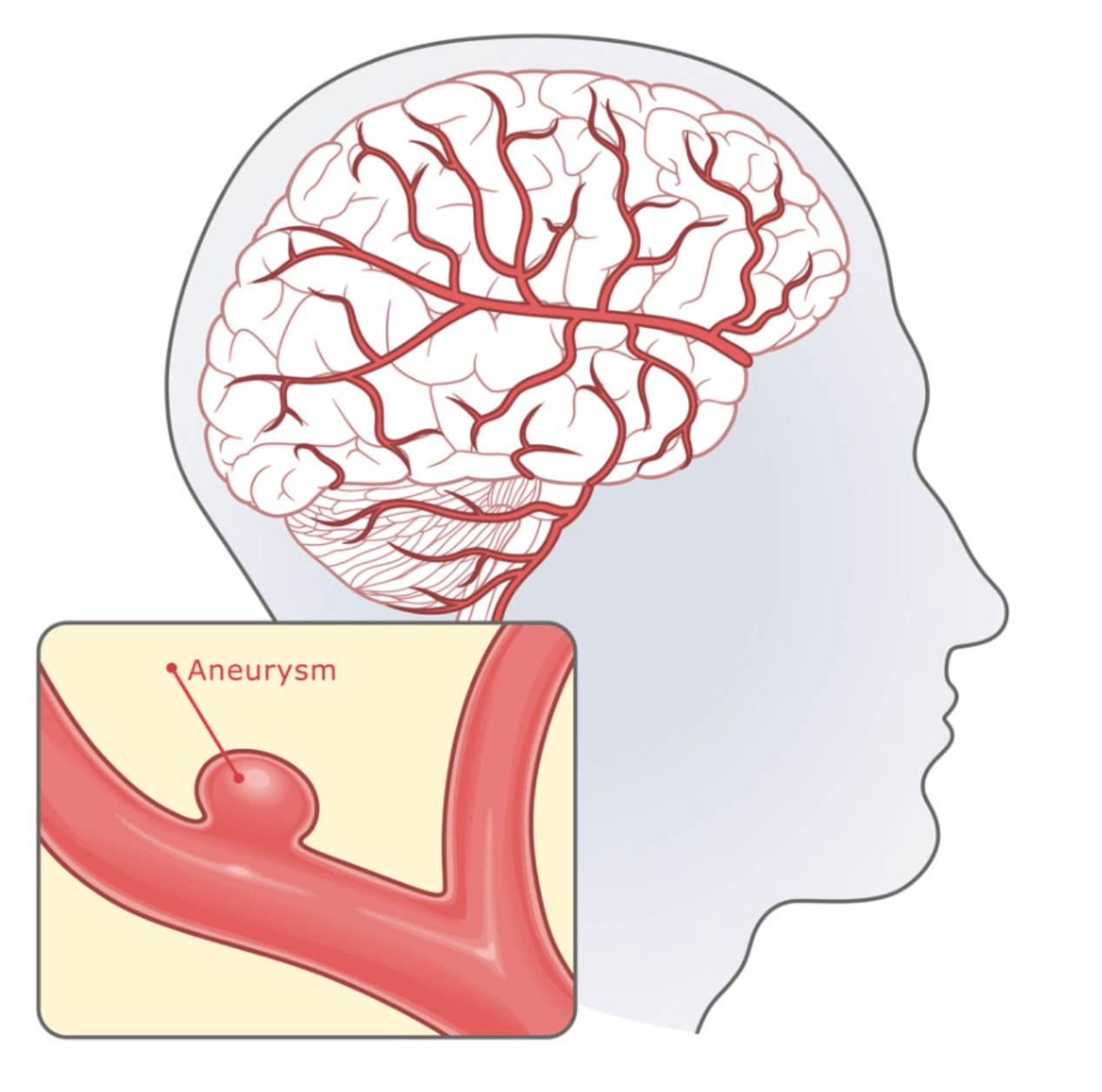
Thousands of individuals in India and the rest of the world deal with this disease every year, which is commonly diagnosed only after it becomes severe enough because of a brain aneurysm. To a person, the former can be noticed too late when everything is already at its critical point, a vindication before being shattered. However, in most instances, there are premonitions of a negative occurrence presented earlier. Their identification at an early stage can be the difference between complete recovery and a catastrophe. This blog aims to raise awareness about the early symptoms of brain aneurysms, the risks of rupture, and available treatment options that patients and their families can understand.
What is a Brain Aneurysm?
A brain aneurysm develops when a fragile section in the wall of a blood vessel is distended, much like a balloon expanding at the weakest area of the body. Other aneurysms remain small and do not cause problems. Others develop slowly and violate the nerves around them. The actual risk, though, is in Taylor, which may cause a form of bleeding referred to as a subarachnoid hemorrhage (SAH).
To explain it:
- When the aneurysm is located in the internal carotid artery (ICA aneurysm), symptoms can manifest at the first stage with eye symptoms.
- If it is located in the anterior cerebral artery (ACA aneurysm), you may experience personality or memory lapses.
- In case it strikes through the middle cerebral artery (MCA aneurysm), the symptoms will be similar to those of a stroke: weakness, facial droop, or speech difficulty.
- All the types are hazardous in their own way, but the lesson is that a nervous wall of a blood vessel when it is pressurised is a time bomb waiting to happen.
Why Are Aneurysms So Dangerous?
Risk arises with the burst of the aneurysm. A rupture releases blood in the area surrounding the brain, typically into the volume of fluid between the brain and its coverings. This is referred to as subarachnoid renal bleeding.
- SAH meaning: This refers to bleeding into the subarachnoid space, which may cause rapid damage to the brain tissue.
- Radiology scan: CT scan/MRI scan helps us to detect bleeding in a few minutes, which is major in case of emergencies.
A rupture of an aneurysm may cause the loss of consciousness in patients immediately, trigger a coma, or even cause death before hospital admission. This explains why it is essential to identify early bruises before rupture.
Are There Warning Signs of a Brain Aneurysm?
The issue with brain aneurysms is that a large number of them are silent up to the time something drastic occurs. Nevertheless, warning signs are present and they should be noted.
The Sudden, Severe Headache
This is the most famous sign. It is said by patients to be the worst headache in someones life. It hits out of the blue as though it were a clap of thunder and is not an experience like a migraine or tension headache. In addition to the pain, nausea, vomiting, dizziness, and light sensitivity can be provided.
Vision Problems
Aneurysms pressing against the optic nerves can trigger:
- Double or blurred vision
- Drooping eyelids
- Pain behind the eye
- Sudden loss of sight in one eye
These signs point us toward aneurysms located near the internal carotid artery.
Other Neurological Clues
Sometimes, the body sends signals that mimic a stroke:
- Numbness or weakness on one side
- Trouble speaking or slurring words
- Confusion or difficulty understanding speech
- Loss of coordination or balance
- Neck stiffness or pain
When these occur together with a severe headache, suspicion of an aneurysm grows stronger.
How Symptoms Differ by Aneurysm Location
- ICA Aneurysm (Internal Carotid Artery): It is likely to cause eyelid droopiness, complex eye movements, or numbness on the face.
- ACA Aneurysm (Anterior Cerebral Artery): The condition poses a higher risk of causing memory and personality lapses, as well as incompetence in making poor decisions. Arm weakness is common afterwards, but it can recur due to weakness in the legs.
- MCA Aneurysm (Middle Cerebral Artery): Usual and severe. Features are similar to those in the case of a stroke: partial weakness, speech disorders, and drooping of the face.
Such distinctions assist nurses in reducing the areas where the aneurysm can be by localising it before it is scanned.
Pre-Rupture Warning Signs
It is essential to understand that many ruptured brain aneurysm symptoms do not show. However, when they do, the signs can be subtle and progressive:
- Headaches that grow worse over time, distinct from regular migraines
- Visual changes, such as losing peripheral vision or seeing flashing lights
- Memory lapses, difficulty concentrating, or sudden changes in mood
- Fatigue or confusion that family members notice more than the patient themselves
Headache patterns are especially telling. A patient might describe them as deep, persistent, and gradually worsening, rather than sharp or throbbing like a typical migraine.
How to Prevent Brain Aneurysm: Can We Reduce the Risk?
Not every risk factor is within our control. The factors include age, genetic history and family history. However, most new daily changes also have substantial impacts on the risk of aneurysm.
Blood Pressure Control
The most potent risk factor is the continuation of high blood pressure. Monitoring regularly, taking medication, and limiting salt consumption are vital.
Quitting Smoking
Smoking wears down the walls of blood vessels and increases blood pressure. The possibility of aneurysm development and rupture is drastically reduced by ceasing to smoke (in addition to not being exposed to secondhand smoke).
Drinking and Coping with Stress.
Too much alcohol increases blood pressure. Chronic stress does the same. The rate of moderate drinking and the relief of stress effects, achieved through yoga, meditation, or even basic breathing exercises, does make a difference.
Safe Physical Activity
Working out helps train the heart and improve performance, but individuals with a history of aneurysms should avoid intensive exercise. Good options include walking, swimming and light yoga.
Can an Aneurysms Heal Itself?
A question comes “can a brain aneurysm be treated?” so, small aneurysms may even remain stable for years. Even in the unique situations, they can go down under the successful management of blood pressure and cessation of smoking. Nowadays, it is risky to wait to be cured naturally. Even minor aneurysms may burst. This is the reason why periodic observation using CT scans or MRI should be prescribed after an aneurysm has been diagnosed.
Treatment Options Today
Modern medicine offers practical solutions, often with shorter recovery times than in the past.
Endovascular Treatments
These are minimally invasive, performed through catheters inserted into blood vessels:
- Coil embolisation: tiny coils are placed inside the aneurysm, causing it to clot and seal.
- Flow diverters: mesh tubes that redirect blood flow away from the aneurysm, allowing healing.
Surgical Treatment
- Clipping: a neurosurgeon places a small metal clip across the aneurysm neck through an opening in the skull. This permanently blocks blood flow into the aneurysm.
Both options are life-saving, and the choice depends on aneurysm size, location, and the patient’s health.
What Happens in an Emergency Rupture?
When a rupture occurs, time is everything. Patients may collapse suddenly, complain of the worst headache of their life, or become unconscious. Immediate hospitalisation is critical.
- Radiology scans confirm bleeding.
- Doctors stabilise blood pressure and reduce brain swelling.
- Emergency brain aneurysm surgery or coiling is usually performed within hours.
Even with prompt care, recovery varies. Some patients return to everyday life, while others may face long-term issues like speech difficulties, memory loss, or weakness. Rehabilitation plays a vital role in recovery.
Living with an Unruptured Aneurysm
Often, patients with unruptured aneurysms are allowed to lead everyday lives. The critical thing is frequent visits to specialists, imaging examinations, and changing lifestyle. Anxiety is prevalent, which is addressed using counselling and support groups for patients. The rupture of many aneurysms is prevented through adequate monitoring.
Expert Care Matters
In India, other experts like Dr Arvind Nanda, who is a product of AIIMS New Delhi and University Hospital Zurich, offer advanced treatment that employs minimally invasive neurovascular procedures. With over 20 years of experience in coiling, stenting, and stroke treatment, Dr Nanda has successfully assisted more than 200 patients in their recovery with safety. His Faridabad practice serves as an indication of how far the modern medical field has travelled to render the treatment methods, which might be considered extremely dangerous, much safer.