

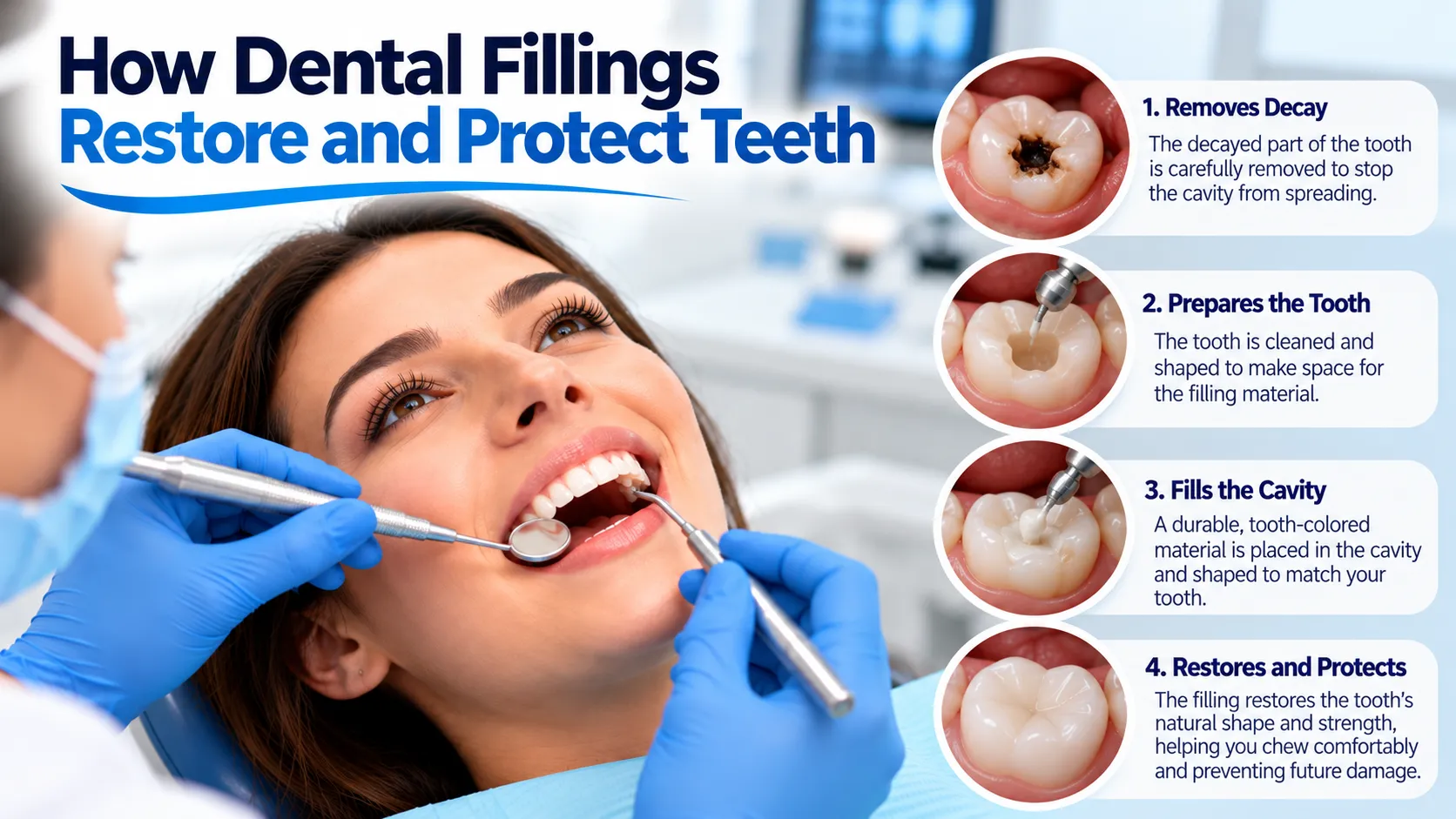
Tooth decay can gradually weaken tooth enamel, create cavities, and affect normal chewing. When damage develops, timely treatment helps preserve the remaining tooth structure. Modern dental fillings repair many cavities, restore tooth function, and protect the treated area from further deterioration. They are among the most common restorative treatments used to maintain natural teeth.
Fillings can also repair certain minor fractures and worn surfaces. Understanding their materials, benefits, and maintenance requirements helps patients make informed decisions about long-term oral health.
What Are Dental Fillings?
Dental fillings are materials used to restore teeth affected by cavities or minor structural damage. During treatment, the dentist removes damaged or decayed tissue and fills the prepared area with a suitable restorative material.
A properly placed filling restores the tooth’s shape, supports chewing, and seals the treated area. However, the tooth must still be cleaned regularly because new decay can develop around existing restorations.
How Does the Dental Filling Procedure Work?
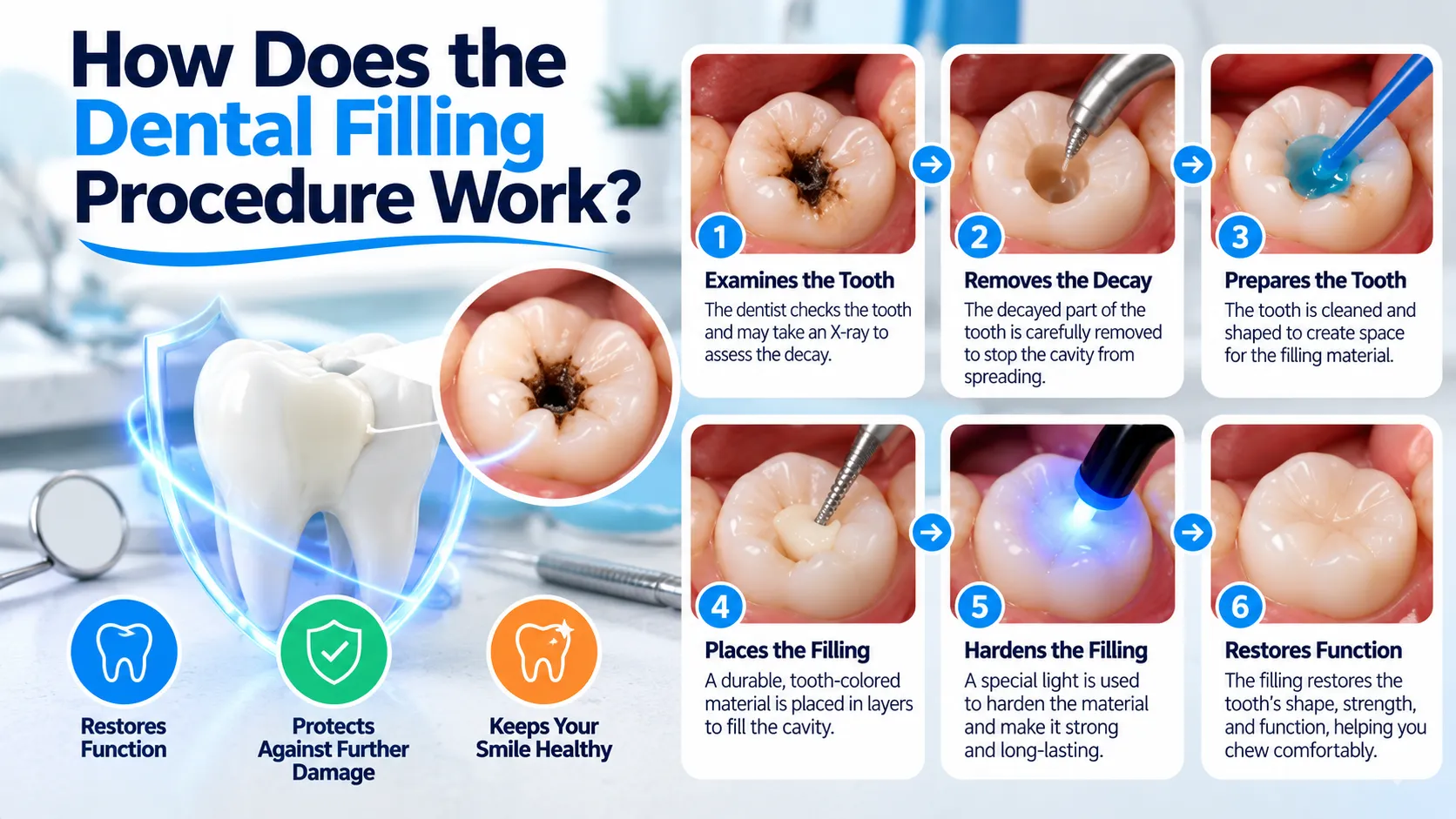
The procedure begins with a dental examination to determine the extent of damage. The dentist may recommend X-rays to assess areas that cannot be examined visually.
When necessary, local anesthesia helps minimize discomfort. The dentist removes the affected tissue and prepares the cavity.
The selected filling material is placed into the prepared space and shaped to match the tooth’s natural contours. Composite materials are hardened using a special curing light.
Finally, the dentist checks the patient’s bite and makes adjustments to improve comfort and function.
What Are the Different Types of Dental Fillings?
Different filling materials offer specific advantages depending on the tooth’s location, condition, and restoration requirements.
Composite Resin Fillings
Composite resin is a tooth-colored material commonly used for visible teeth and suitable cavities in back teeth. It can closely match the surrounding enamel.
Amalgam Fillings
Amalgam is a metal-based restorative material historically used for certain back teeth. Its suitability depends on clinical circumstances and applicable recommendations.
Ceramic Restorations
Ceramic restorations provide a natural appearance and can be suitable for more extensive repairs. Some require laboratory fabrication before placement.
Why Is Early Cavity Treatment Important?
Untreated cavities may continue progressing into deeper tooth structures. As decay advances, it can cause sensitivity, discomfort, and increasing structural damage.
When bacteria reach the dental pulp, inflammation or infection may develop. In certain situations, endodontic treatment becomes necessary to remove infected pulp tissue and preserve the tooth.
Treating cavities before extensive damage occurs can reduce the need for more complicated procedures. However, the appropriate treatment depends on the tooth’s condition.
How Can Tooth-Colored Fillings Improve Your Smile?
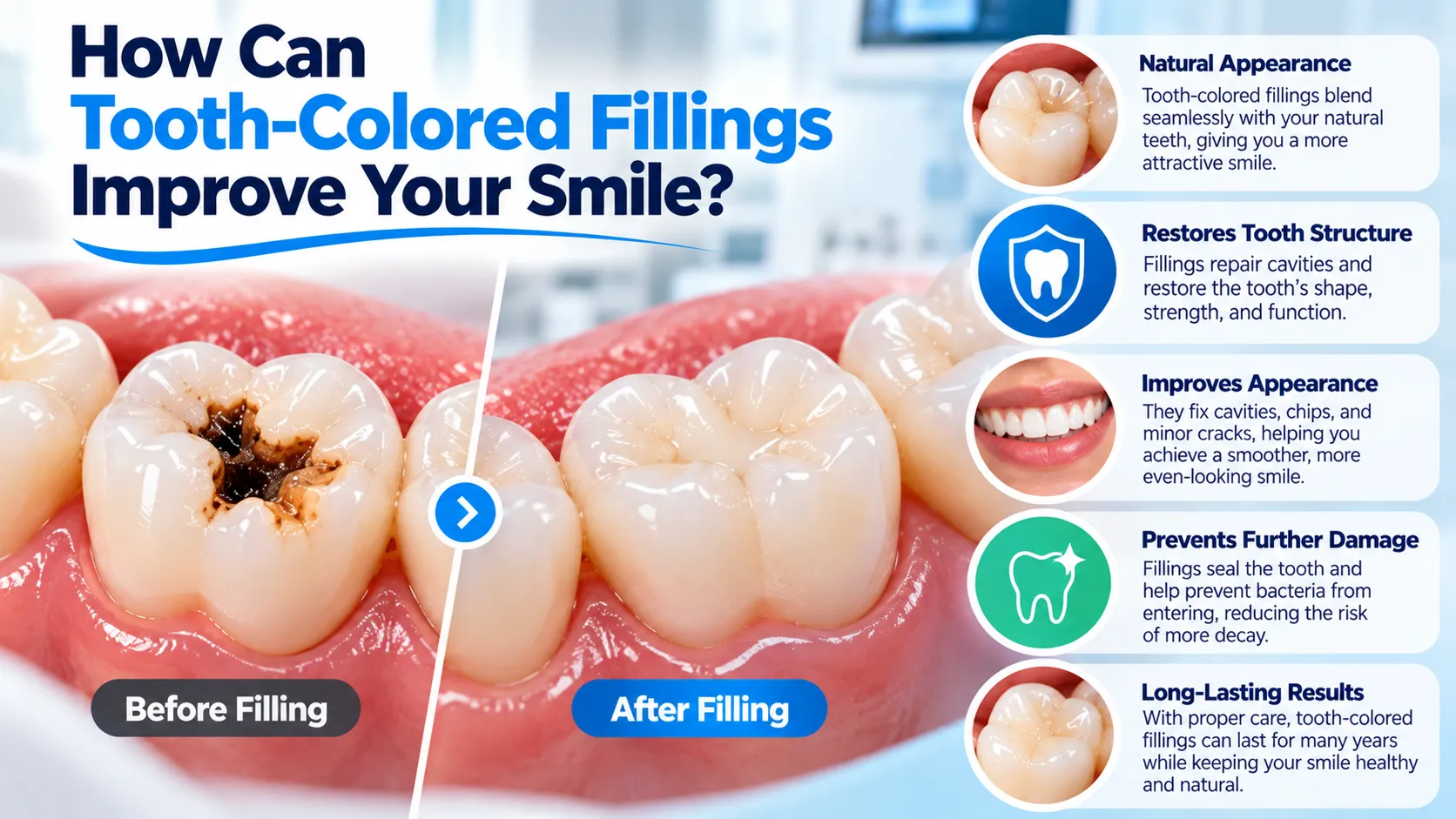
Tooth-colored fillings can restore damaged areas while maintaining a natural appearance. Composite resin is selected to resemble the surrounding enamel, making restorations less noticeable.
For certain visible chips or minor imperfections, aesthetic dentistry may include tooth-colored bonding techniques that improve appearance while preserving natural tooth structure.
The appropriate restoration depends on the size of the damaged area, the tooth’s location, and individual functional requirements.
How Long Do Dental Fillings Last?
The lifespan of a dental filling depends on its material, size, location, and the patient’s oral habits.
Fillings exposed to strong chewing forces or frequent teeth grinding may experience additional wear.
Over time, restorations can develop fractures, surface deterioration, or gaps around their edges. These changes may require repair or replacement.
Regular dental assessments help identify potential problems before they become more complicated.
How Can You Protect Your Dental Fillings?
Maintaining effective oral hygiene is essential for preserving restored teeth.
Brush twice daily with fluoride toothpaste and clean between your teeth every day. Reducing frequent sugary snacks can help lower the risk of new cavities.
Avoid chewing ice and other extremely hard objects that may damage teeth or restorations.
Persistent sensitivity, discomfort while biting, or a loose filling should be evaluated by a dental professional.
Frequently Asked Questions
1. Are Dental Fillings Painful?
Local anesthesia is commonly used when necessary. Some temporary sensitivity may occur after treatment.
2. Can Dental Fillings Prevent New Cavities?
Fillings repair existing damage but cannot prevent new decay. Good oral hygiene remains essential.
3. Are Composite Fillings Durable?
Composite fillings can provide durable restorations, although their lifespan depends on size, placement, and daily habits.
4. Can a Damaged Filling Be Replaced?
Yes. A dentist can assess whether a damaged filling needs repair or complete replacement.
5. Do All Cavities Require Fillings?
Not always. Some early enamel lesions may be managed without drilling, while established cavities often require restorative treatment.
Conclusion
Dental fillings play an important role in repairing damaged teeth, restoring normal chewing, and limiting the progression of existing cavities. Appropriate restorative materials and consistent oral hygiene contribute to their long-term effectiveness.
Ongoing family dentistry care helps patients maintain regular dental assessments, monitor existing fillings, and identify developing oral health concerns. Combined with daily preventive habits, these measures.
Read More: How Does Cosmetic Dentistry Transform Your Smile