

Healthcare has long been associated with physical spaces, clinical environments, and processes that often feel rigid, time-consuming, and emotionally distant for patients navigating complex medical journeys.
In recent years, however, a new paradigm has begun to emerge where digital immersion is gradually transforming how care is delivered, understood, and experienced across different healthcare ecosystems.
The concept of the metaverse in healthcare represents this shift, combining virtual reality, augmented reality, artificial intelligence, and connected systems to create interactive environments where medical interactions can occur beyond traditional physical boundaries.
Understanding the Core Idea Behind the Metaverse in Healthcare
At its foundation, the metaverse in healthcare refers to persistent, shared virtual environments where patients, healthcare providers, and medical data interact in real time through immersive technologies.
These environments are not limited to visual simulations, but extend into functional spaces where consultations, diagnostics, training, and therapy sessions can be conducted with a level of engagement that traditional methods often cannot achieve.
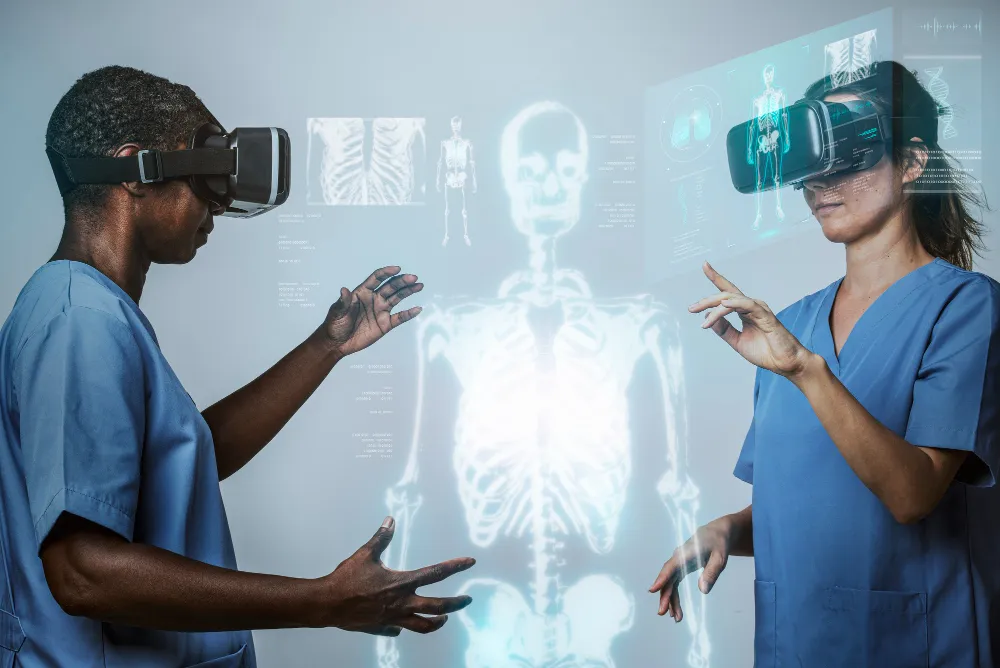
For example, a patient can enter a virtual clinic using a headset and interact with a physician who is represented through a digital avatar, allowing for more accessible and flexible consultations regardless of geographical limitations. Similarly, medical professionals can use immersive simulations to visualize complex anatomical structures, which enhances both diagnosis and treatment planning in ways that static imaging cannot fully support.
Market Growth Reflects Increasing Adoption and Interest
While examining the broader impact of this technology, I came across a market overview by Roots Analysis that highlighted the scale and momentum of this transformation.
It suggested that “The metaverse in healthcare market, valued at 9.6 billion dollars in 2024, is projected to reach 14.6 billion dollars in 2025 and 219.1 billion dollars by 2035, representing a CAGR of 31.1 percent during the forecast period.”
Such rapid growth indicates that the metaverse is not merely an experimental concept, but a rapidly evolving ecosystem that is attracting investment, innovation, and practical implementation across multiple healthcare domains.
This expansion is driven by the increasing demand for remote care, personalized treatment approaches, and more engaging patient experiences that go beyond traditional consultation models.
Practical Applications That Are Already Emerging
One of the most significant applications of the metaverse in healthcare lies in medical training and education, where immersive simulations allow students and professionals to practice procedures in a risk-free virtual environment.
These simulations can replicate complex surgical scenarios with high accuracy, enabling practitioners to refine their skills without the limitations or risks associated with real-world practice.
Another important application is in patient therapy, particularly in areas such as mental health and rehabilitation, where virtual environments can be used to create controlled and personalized therapeutic experiences. For instance, exposure therapy for anxiety disorders can be conducted within a virtual setting that gradually introduces stimuli in a safe and monitored manner.
Additionally, digital twins of patients, which are virtual representations based on real-time health data, are being explored to simulate disease progression and test treatment outcomes before applying them in real life.
Enhancing Patient Engagement and Understanding
One of the most overlooked challenges in healthcare is the gap between medical information and patient understanding, which often leads to confusion, anxiety, and poor adherence to treatment plans. The metaverse addresses this challenge by providing visual and interactive explanations that make complex medical concepts easier to comprehend for patients.
Instead of relying solely on verbal explanations or static images, patients can explore three-dimensional models of their own anatomy and better understand their conditions and treatment options. This level of engagement fosters a more collaborative relationship between patients and healthcare providers, where decisions are made with greater clarity and confidence.
Challenges That Require Careful Consideration
Despite its potential, the integration of the metaverse into healthcare is not without challenges that must be addressed to ensure safe and effective implementation.
Issues related to data privacy and security are particularly critical, as immersive environments often involve the collection and processing of highly sensitive personal health information. Ensuring the accuracy and reliability of virtual simulations is equally important, especially in clinical decision-making scenarios where errors could have serious consequences.
As emphasized in established quality frameworks for health-related content, accuracy and trustworthiness are essential because misleading or incorrect information can directly impact patient outcomes.
Accessibility also remains a concern, as the adoption of advanced technologies such as virtual reality headsets and high-speed connectivity may not be evenly distributed across different regions and populations.
The Future Direction of Healthcare Innovation
The metaverse in healthcare represents more than just a technological advancement, as it signals a broader shift toward patient-centered, immersive, and data-driven care models.
As technology continues to evolve, these virtual environments are expected to become more integrated with existing healthcare systems, creating hybrid models that combine physical and digital care seamlessly. This evolution has the potential to reduce barriers to access, improve the quality of care, and create more personalized healthcare experiences that adapt to individual needs and preferences.
Ultimately, the success of the metaverse in healthcare will depend on how effectively it balances innovation with ethical responsibility, ensuring that technological progress translates into meaningful improvements in patient outcomes.
The transformation is already underway, and while it may take time to fully mature, the direction is clear toward a future where healthcare is not confined to physical spaces but extended into immersive and intelligent digital environments.